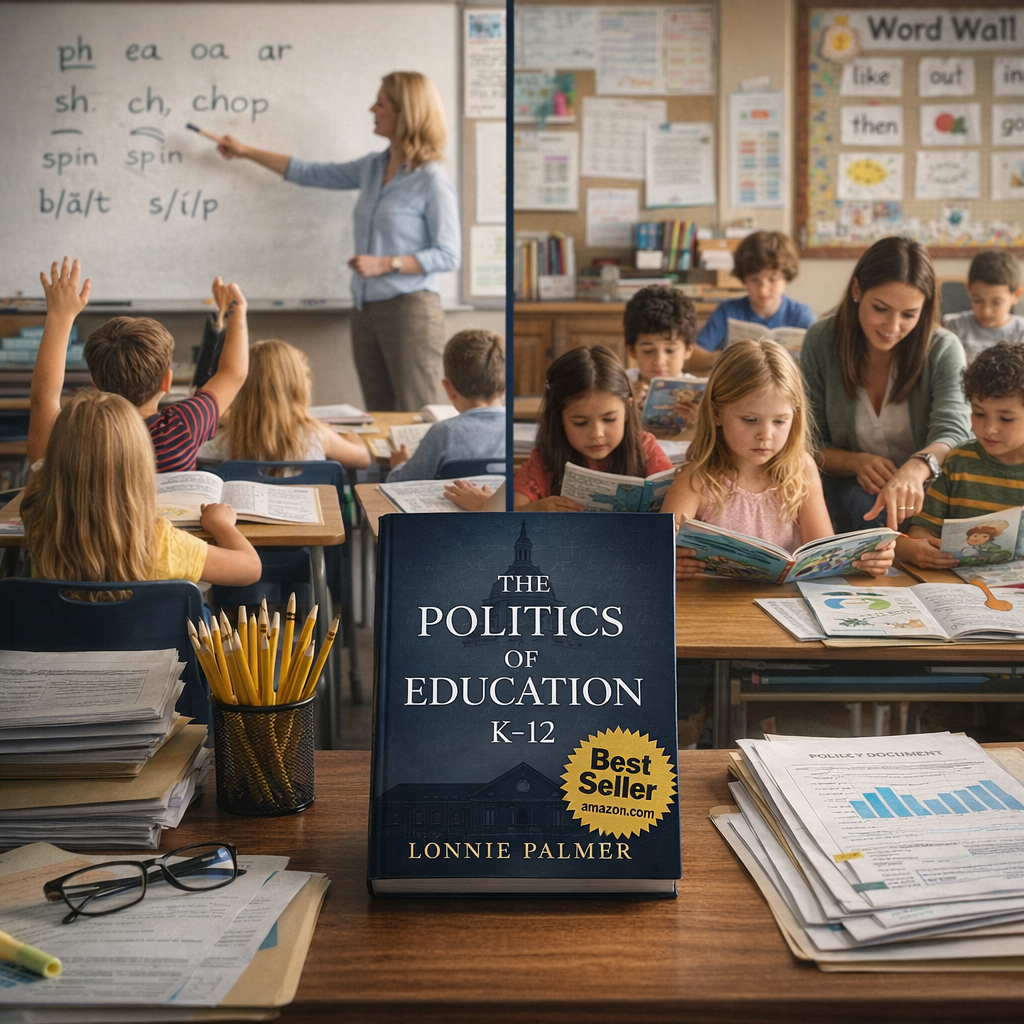
The debate around phonics vs balanced literacy continues to shape reading instruction across the United States, but the research has been clear for years. Studies completed before 2010 and confirmed many times since show that structured phonics consistently produces stronger reading outcomes than balanced literacy approaches.
Structured phonics teaches students how to decode words, recognize sounds, and build reading skills step by step. This method creates a strong foundation that supports long term literacy success and confidence in reading.
Why Balanced Literacy Falls Short
In the discussion of phonics vs balanced literacy, one of the biggest concerns is how balanced literacy is taught. Promoted by Dr. Lucy Calkins of Columbia University, this approach relies heavily on pictures and context clues to help students guess words they do not recognize.
This reduces the emphasis on phonics and decoding skills, which often leads to gaps in reading ability and long term comprehension challenges.
Phonics vs Balanced Literacy: Key Differences in Teaching Methods
When comparing phonics vs balanced literacy, the differences in teaching methods are clear:
• Phonics focuses on decoding words through sound recognition
• Balanced literacy relies on context clues and visual guessing
• Phonics builds strong foundational reading skills
• Balanced literacy often leads to inconsistent reading development
These differences directly impact student outcomes across school systems.
For more insights on education policy and reform, visit the official Lonnie Palmer website:
https://lonniepalmer.com/
Why Education Reform Fails in the United States
Political Influence on Education Policy
If the research on phonics vs balanced literacy is so clear, why has structured phonics not been fully implemented in states like New York?
The answer is politics.
Two years ago, Governor Kathy Hochul allocated ten million dollars to the New York State United Teachers to retrain educators in reading instruction. While this appeared to be progress, it also revealed the deeper political challenges behind meaningful reform.
Resistance from Institutions and Unions
In many cases, the failure to act on phonics vs balanced literacy research comes down to institutional resistance:
• Politicians avoid directly telling teachers they need to change
• Teachers respond more to unions than government directives
• Unions rely on teacher support, making honest correction difficult
This creates a system where real reform is softened, delayed, or diluted.
Case Study: New York vs Mississippi Reading Outcomes
Test Score Trends Before and After Policy Changes
States like Mississippi and Louisiana, which adopted structured phonics, have seen improvements in test scores before, during, and after the pandemic.
New York, where balanced literacy remained dominant, has experienced declining performance over the same period. This real world comparison highlights the impact of phonics vs balanced literacy on student success.
Impact of Phonics Based Instruction on Student Outcomes
The results make one thing clear. The issue is not external factors. It is the teaching method itself.
How Education Systems Resist Change
The challenges surrounding phonics vs balanced literacy are not new.
During my time working within the New York State School Boards Association, I saw how organizations avoided telling their members what they were doing wrong, even when there was clear evidence.
The reason was simple. Financial support and membership mattered more than accountability.
The result is predictable. Students fall behind while institutions protect themselves.
Recommended Education Reform Books and Resources
If you want to explore more about education reform, teaching strategies, and policy challenges, review these resources:
Education reform books for teachers.
Books on improving schools and teaching.
Best selling education reform books.
Nonfiction education books with real stories.
Where to buy education books online.
Teacher professional development books.
The Politics of Education: A Deeper Look
To understand how policy decisions shape education outcomes, read The Politics of Education: K-12 by Lonnie Palmer.
This book provides real world insights from decades of experience in classrooms and leadership roles across urban, suburban, and rural school systems.
Frequently Asked Questions
What is the difference between phonics and balanced literacy?
Phonics teaches students to decode words using letter sounds, while balanced literacy relies more on context clues and visual recognition. Research consistently shows phonics produces stronger reading outcomes.
Why is structured phonics more effective?
Structured phonics builds foundational reading skills step by step. It helps students understand how language works rather than guessing words, leading to better long term comprehension.
Why has balanced literacy been widely used despite weaker results?
Balanced literacy has been promoted through teacher training programs and institutions for years. Changing these systems requires political and organizational shifts, which often face resistance.
How does politics affect education reform?
Political decisions influence funding, training, and policy implementation. Stakeholders often avoid major changes to maintain support, which slows down effective reform.
Which states have successfully implemented phonics based instruction?
States like Mississippi and Louisiana have implemented structured phonics approaches and have seen measurable improvements in reading scores.
About Lonnie Palmer
Lonnie Palmer taught high school physics, AP Physics, chemistry, algebra, geometry, trigonometry, and pre calculus. He later served as a superintendent of schools, working across urban, suburban, and rural districts.