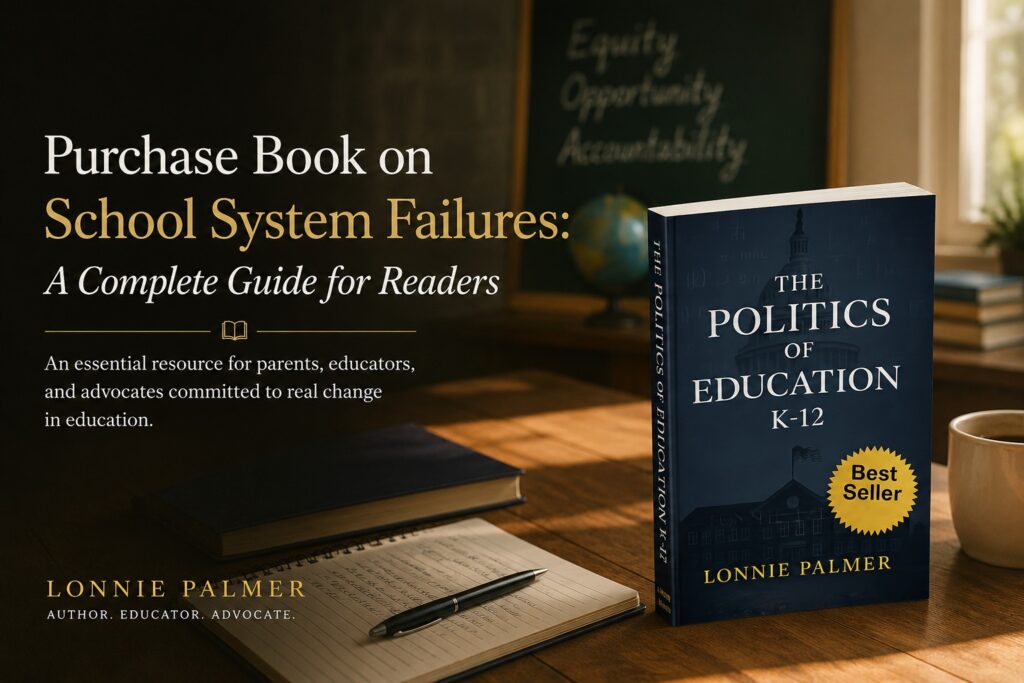
When you decide to purchase a book on school system failures, you are taking an important step toward understanding the complexities of education reform. The book “Politics of Education K-12” by Lonnie Palmer dives deep into the multifaceted issues that plague our educational institutions. This blog will explore the significance of recognizing school system failures and how literature can guide us toward meaningful change.
The Importance of Addressing School System Failures
In addition, school system failures are not merely administrative issues; they affect students, teachers, and communities at large. When you purchase a book on school system failures, you equip yourself with the knowledge to understand these key issues. The Politics of Education K-12 provides ideas into how various factors contribute to these failures.
Understanding the Root Causes
That said, to effectively address school system failures, it’s key to understand their root causes. These can include inadequate funding, poor leadership, and systemic inequalities. Research shows that financial disparities can lead to big differences in educational quality. For instance, the Learning Policy Institute highlights how funding impacts student outcomes.
Systemic Inequalities
As a result, another major aspect of school system failures is systemic inequality. According to the Economic Policy Institute, children from disadvantaged backgrounds often face big barriers when it comes to accessing quality education. These barriers can perpetuate cycles of poverty and limit opportunities for future success.
How Literature Can Illuminate School System Failures
In fact, literature plays a vital role in highlighting the issues within the education system. By choosing to purchase a book on school system failures, you are opening your mind to new perspectives and solutions. The Politics of Education K-12 examines various policies and their effects on students and educators.
Case Studies and Real-Life Examples
On top of that, books often include case studies that illustrate the real-life implications of school system failures. These examples can be powerful motivators for change. For instance, examining successful education reform initiatives can provide helpful lessons for policymakers and educators alike. You can find more about useful education reform in my blog post on education reform books for teachers.
Encouraging key Thinking
With this in mind, reading about school system failures encourages key thinking. It allows readers to evaluate existing policies and consider alternative approaches. As you delve into the Politics of Education K-12, you will gain ideas into the political landscape of education, which is key for anyone interested in making a difference.
Why Purchase Politics of Education K-12?
Most importantly, when you purchase Politics of Education K-12, you are investing in a complete resource that tackles the pressing issues within our school systems. This book provides a thorough analysis of the political factors that influence education and offers solutions to improve our schools.
Expert ideas
At the same time, lonnie Palmer, the author, brings years of experience in the education sector. His ideas are backed by research and practical knowledge. This book is not just a theoretical exploration; it offers actionable strategies for educators and policymakers. For more resources, you can check out my list of books on improving schools and teaching.
Engaging with the Community
In other words, education is a community effort. By purchasing this book, you join a larger conversation about the future of education. Engaging with others who are also concerned about school system failures can lead to collaborative efforts to drive change. You can find more about community engagement in education in my blog on buying nonfiction education books with real stories.
Taking Action Against School System Failures
To be clear, understanding school system failures is just the beginning. The next step is to take action. By reading and discussing the issues presented in the Politics of Education K-12, you can become an advocate for change. This book encourages readers to think critically about their roles in the education system.
Advocating for Policy Change
Notably, one of the most useful ways to address school system failures is through advocacy. By understanding the policies that govern education, you can effectively advocate for changes that will benefit students and educators. Resources like the Education Data Initiative provide helpful statistics that can support your advocacy efforts.
Engaging in Professional Development
After all, teachers and educators can also benefit from ongoing professional development. This helps them stay informed about new research and best practices in education. For more information, explore my blog on teacher professional development books.
Finding Resources to Support Your Learning
In addition to purchasing books like the Politics of Education K-12, you can find various resources online that address school system failures. Websites and organizations dedicated to educational reform often publish research, articles, and policy recommendations. These resources can further improve your understanding and ability to advocate for change.
Utilizing Online Resources
Because of this, many organizations provide free resources that can help you learn more about school system failures. For instance, the RAND Corporation offers extensive research on education and literacy. By utilizing these resources, you can deepen your understanding and become a more useful advocate.
Connecting with Other Educators
First, networking with other educators and advocates can also provide support and insight. Joining forums, attending conferences, and participating in community discussions can help you stay informed and engaged. You might find inspiration from other educators who are also passionate about addressing school system failures.
Next, common school system failures include inadequate funding, poor teacher training, lack of resources, and systemic inequalities that affect student outcomes.
Finally, books provide in-depth analyses, case studies, and expert ideas that can help you understand the complexities of school system failures and potential solutions.
For example, this book offers a complete look at the political factors influencing education and provides actionable strategies for improving school systems.
In addition, advocacy is key for driving policy changes that can improve educational outcomes and address systemic issues within the school system.
That said, you can explore various online resources, including articles, research papers, and educational organizations dedicated to reforming the education system.
As a result, engaging with your community can involve attending local meetings, participating in discussions, and collaborating with other educators and advocates to drive change.
In fact, useful advocacy can include raising awareness about issues, contacting policymakers, and participating in campaigns that promote educational reform.